I.
Bridging the Gap
Between who they are and who they're becoming. Between the corner and the classroom. Between the cell and the community. We close distances that don't have to exist.
Founded in 2002 on a vow first made in a prison cell. For over two decades, Project Drive has helped young people at the crossroads steer their own energy toward purpose — before someone else writes their ending for them.
It's not about where you start.
It's about who helps you turn the wheel.
A founder's story is not decoration. It is the contract.
Inside a prison cell, Gregory L. Joyner did the work no one was asking him to do. He listened. To every man. Every story. And in nearly every one, he heard his own life echoing back — same beginnings, same wrong turns, same shut doors.
Before he ever walked out, he made himself two promises. He would never come back. And someone else's son would not have to learn what he had learned the hard way.
The day he was released, the work began. Block by block. Kid by kid. Conversation by conversation. He didn't wait for an organization to give him permission to help — he just helped. For two decades.
Project Drive Inc., founded in 2002, is the vessel built around work that was already moving. A formal name for an informal vow he had been keeping every day since the gate closed behind him.
Inside Out, his published memoir, is the receipt.
Each initiative answers a different door that closes on a young life. Together they form a single roadmap — designed to be entered from anywhere on it.
Between who they are and who they're becoming. Between the corner and the classroom. Between the cell and the community. We close distances that don't have to exist.
Peer-story circles built on Gregory's founding skill: hear them before you advise them. Youth speak. Mentors listen. Direction follows. The exact discipline that began in a cell, formalized for the kids on the outside.
Writing and storytelling workshops. Every young person drafts the first chapter of their own Inside Out. The author teaches them to author themselves — because the kid who can write their story can rewrite their future.
Digital fluency, AI literacy, content, and code. The streets used to teach survival. The screen teaches sovereignty now. We make sure our youth aren't the last to learn the language of what comes next.
Re-entry mentorship for young adults coming home. Lived experience as curriculum. Most organizations stop at prevention — we hold both ends of the road.
Each initiative runs on people, time, and capital. Your contribution funds a specific lane of the road — and you'll see exactly which young lives it carried.
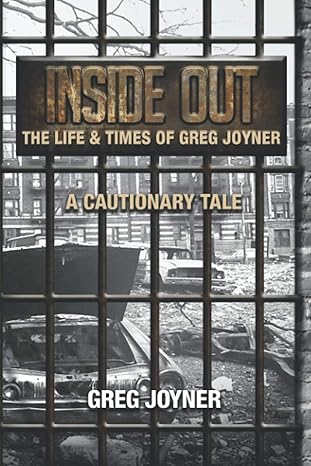
The Life and Times of Gregory L. Joyner
Some men give back through a checkbook. Gregory wrote his back into existence — page by page — so that what he survived would become something a young person could read instead of repeat.
The book is the testimony. Project Drive is the action. One without the other was never the plan.
Three ways forward: give once, give monthly, or give time. Every road we open was funded and walked by someone who chose to.